
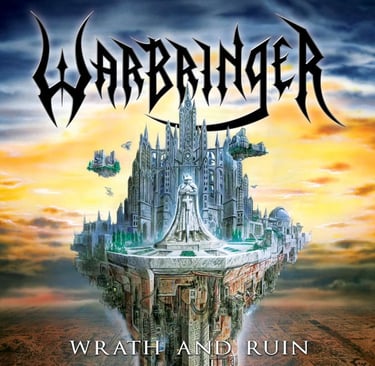
Warbringer - Wrath and Ruin Review
A prevalent trend in subgenres such as Thrash is that adhering too rigidly to an established sound may result in perceptions of stagnation, whereas diverging significantly can lead to criticisms of selling out and inauthenticity. Warbringer’s seventh studio album, however, masterfully side steps such notions as Its strength lies in pushing the boundaries of their sound while remaining true to their thrash metal roots.
Album opener “The Sword and the Cross,” is a perfect example of this balance. Starting with a slow build, it gradually gathers momentum before transitioning smoothly into a more traditional thrash groove while keeping the listener engaged with subtle shifts in its rhythmic structure. Lyrically, the song explores the feudal system as a precursor to capitalism, suggesting that the freedoms we experience today are still governed by those claiming superiority through lineage.
Momentum continues with “A Better World,” which wastes no time launching into the proverbial pit as it fuses early nineties melodic death metal influences with classic thrash energy. Frontman John Kevill’s incisive lyricism captures today’s mood of helplessness and frustration, articulating the sense that genuine change is blocked by those in power, whether through greed, superiority, or a lack of moral compass.
The band’s death metal influences come to the forefront on “The Necromancer,” slowing the pace and offering a heavier, groove-oriented track with hints of Dissection and Bolt Thrower thrown in for good measure. In contrast, “Jackhammer” delivers classic punk infused thrash that is a blast to listen to, as it injects a sense of ‘good friendly violent fun’, into proceedings.
“Strike from the Sky” takes a similar approach but adds a Teutonic edge reminiscent of early Kreator and Destruction (Kevil’s Schmier impression is unmistakable). It’s another banger in the classic thrash mould, full of energetic vitriol, and driven by infectious gang shouts, while lyrically reflecting on technological warfare and its increased prevalence.
Followed by perhaps the album’s most progressive track, “Cage of Air,” starts with an ominous, industrial-tinged spoken word introduction, featuring plenty of time changes and an almost meditative section towards its conclusion before erupting in unbridled rage, evoking a sense of being trapped without visible boundaries. The track uses everything from acoustic interludes to whispered vocals as it questions the freedom, we believe we possess, suggesting that even those escaping urban life remain tethered to the corporate machine.
Whereas their previous two albums concentrated mostly on themes of war and its destructive technology, Wrath and Ruin Explore’s a broader range of subjects with frontman Kevil’s often ironic lyrics, expertly balancing gravity with humour, making it both a relatable and genuinely enjoyable experience.
With the album held together by a dynamic and clear production, the album’s final track, “The Last of My Kind,” skilfully brings together the record’s varied musical elements as it closes another remarkable chapter in the band’s steady rise to the very top of the retro Thrash Metal echelon.